
Passer au contenu

Basket

Your cart is empty

Discover the best exercises to do with the Outdoor Wall-Mounted Pull-Up Bar!

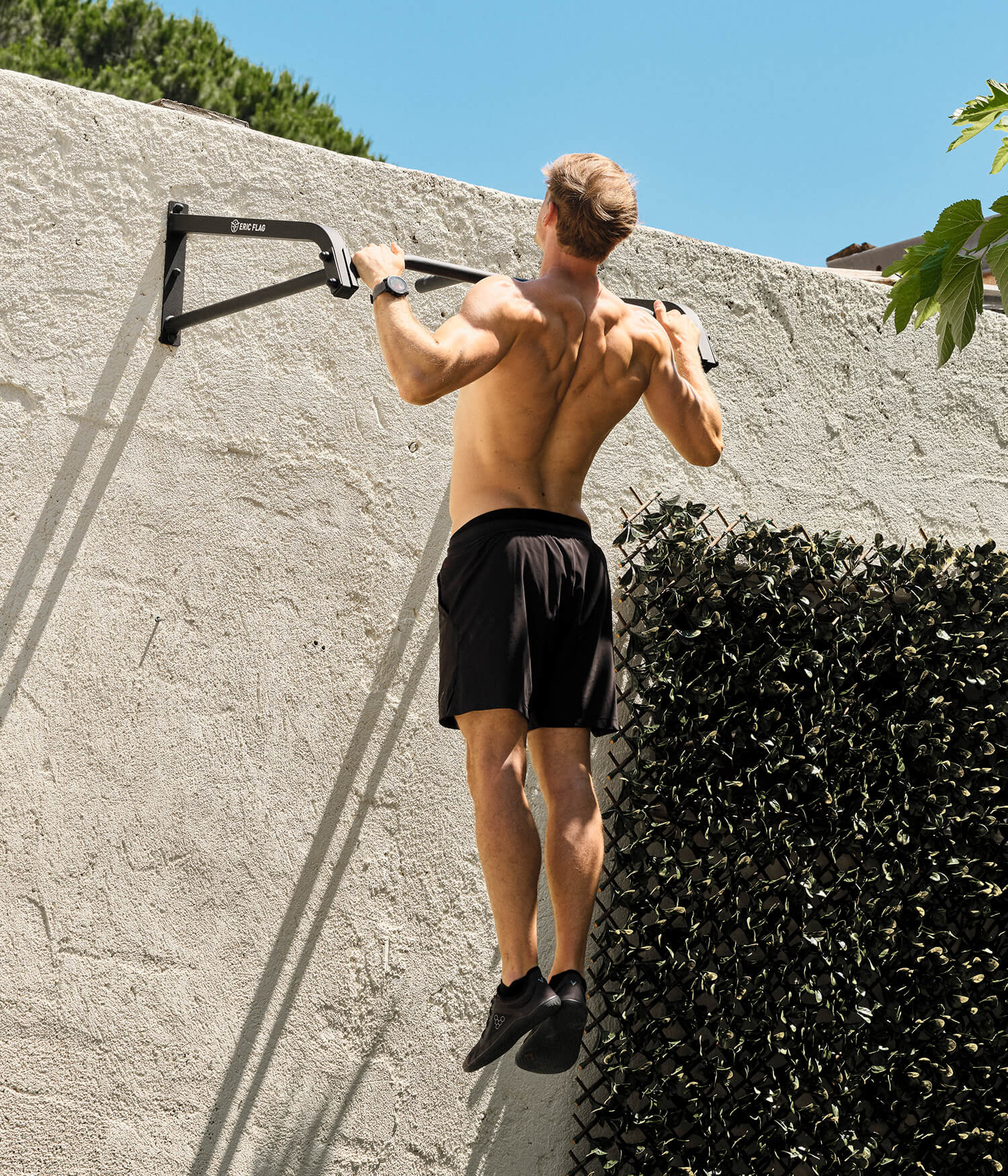
Pronation pull-ups

Muscles worked:
Latissimus dorsi, trapezius, rhomboids, forearms.

Execution

  1. Hang from the bar with your arms straight and your palms facing forward.
  2. Engage your shoulder blades by pulling them down slightly before pulling.
  3. Pull your chest toward the bar while keeping your core tight.
  4. Pull yourself up until your chin is above the bar.
  5. Slowly lower yourself until your arms are fully extended.

Tips:
Remember to pull your elbows down rather than just using your arms.
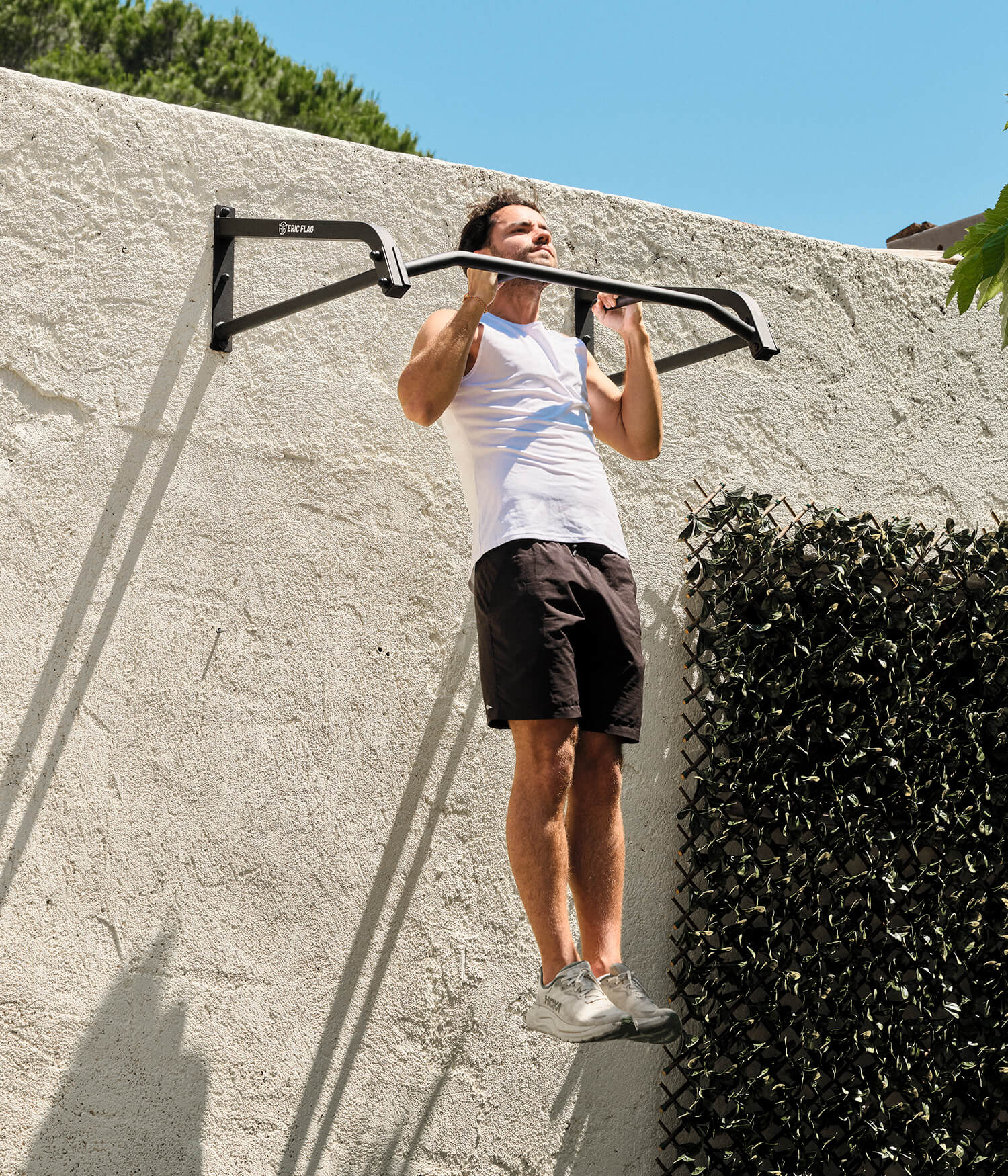
Chin-ups

Muscles worked:
Latissimus dorsi, trapezius, rhomboids, biceps, forearms.

Execution

  1. Hang from the bar with your palms facing you.
  2. Place your hands about shoulder-width apart.
  3. Squeeze your shoulder blades together and keep your upper body stable.
  4. Pull until your chin is above the bar.
  5. Descend while controlling the negative phase.

Tips:
The supinated grip works the biceps more than the pronated grip.

Avoid bending your wrists: keep a firm, straight grip throughout the entire movement.
Neutral Grip Pull-ups

Muscles worked:
Latissimus dorsi, trapezius, biceps, forearms.

Execution

  1. Hang from the handles with your palms facing each other.
  2. Squeeze your shoulder blades together and keep your upper body stable.
  3. Pull your chest toward the bar until your chin is above the handles.
  4. Slowly lower yourself, controlling the lowering phase, until your arms are fully extended.

Tips:
Avoid swaying or using your legs to push off: keep your core engaged throughout the entire movement.
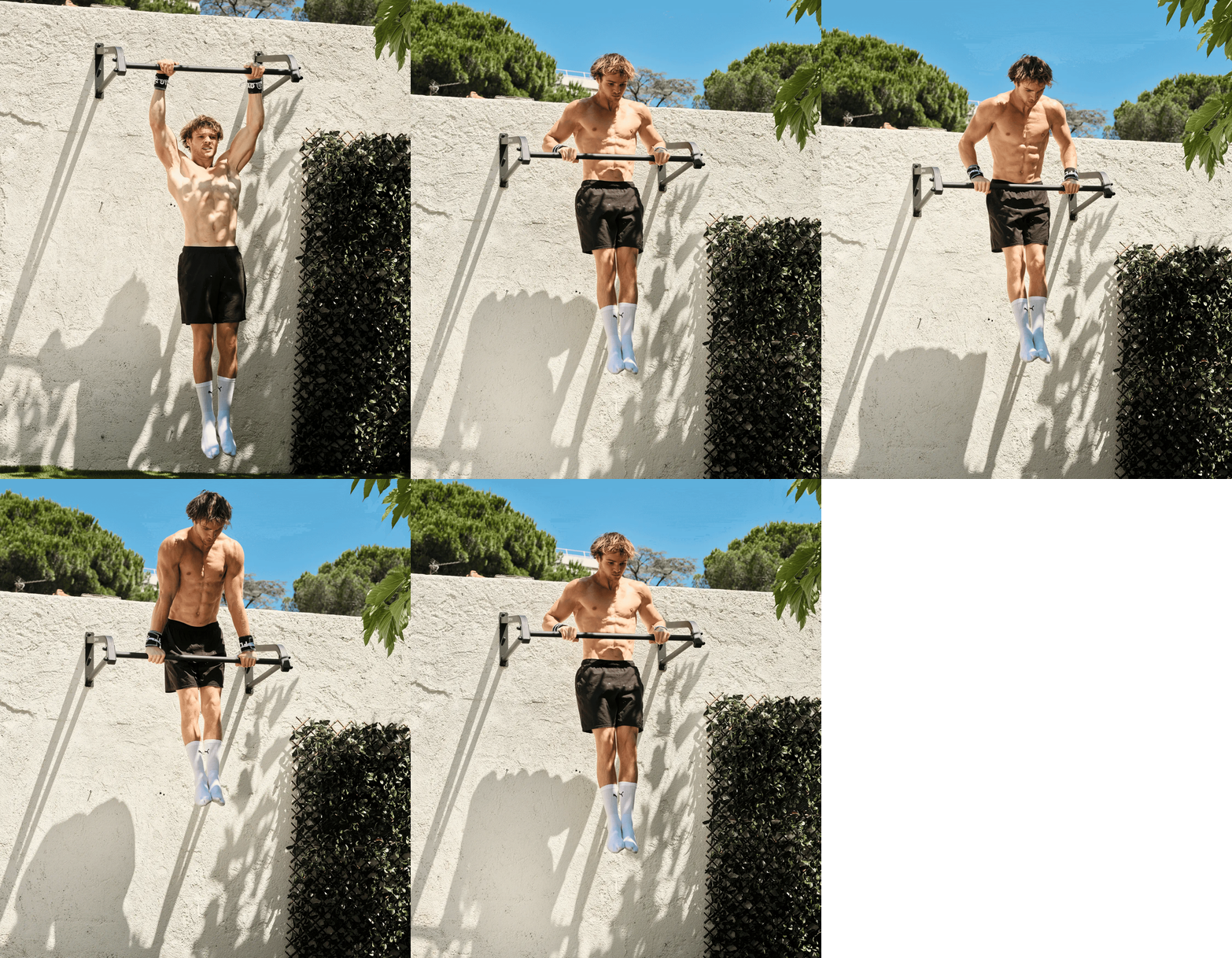
Muscle-up

Muscles exercised:
Lats, triceps, pectorals, shoulders.

Execution

  1. Suspend yourself with arms outstretched and body sheathed.
  2. Perform an explosive pull to bring your chest above the bar.
  3. Make a smooth transition by rotating your wrists.
  4. Push until your arms are fully extended.
  5. Slowly descend, controlling the descent.

Tips:
Focus on explosive pull-ups and deep dips before increasing your speed.

Keep the bar close to your body for a smooth transition.
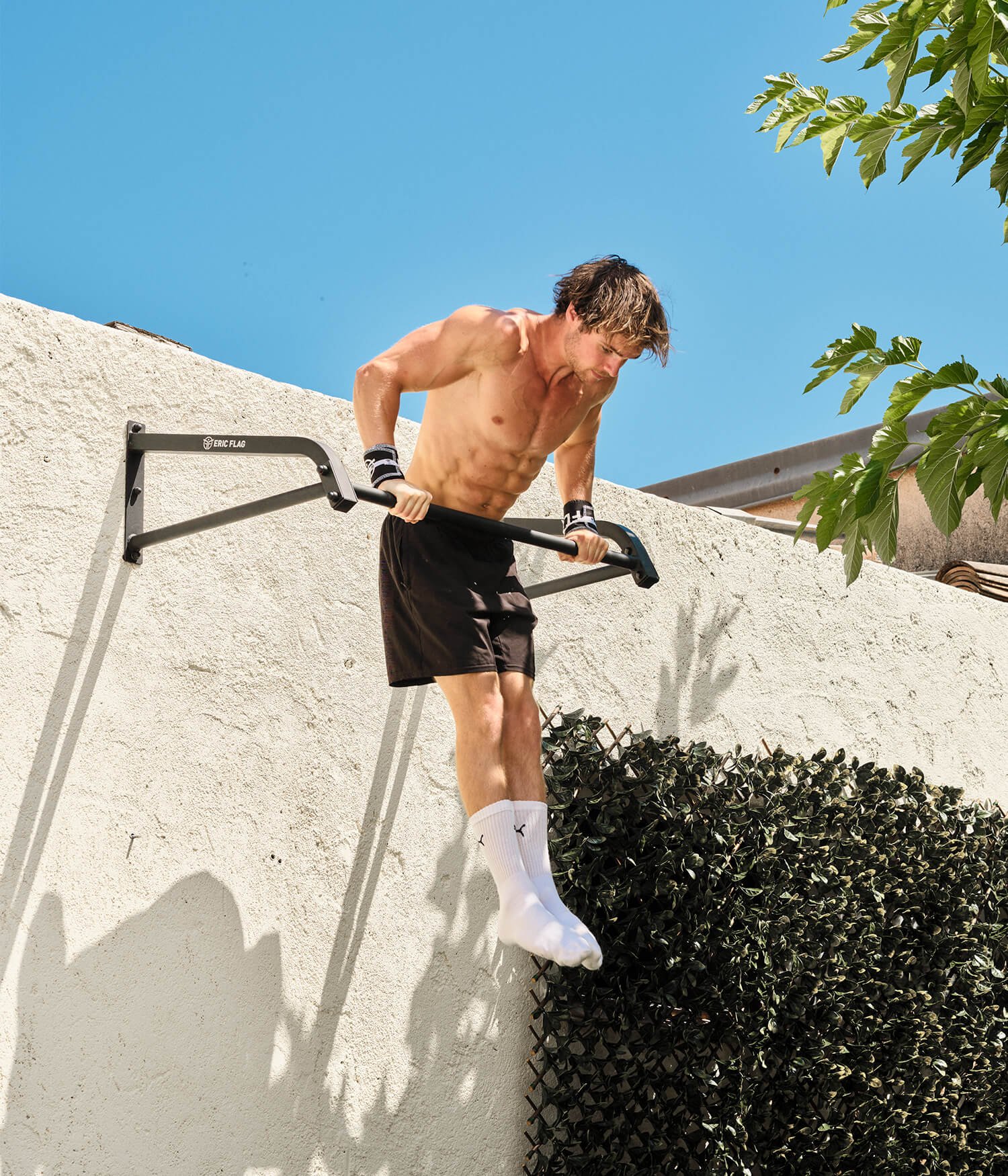
Dips

Muscles exercised:
Lower pectorals, triceps, anterior deltoids.

Execution

  1. Place your hands on the bar with straight arms.
  2. Lower yourself slowly until your elbows form a 90-degree angle or your chest touches the bar.
  3. Push hard until your arms are fully extended.
  4. Keep your torso slightly bent forward to target the pectoral muscles.
  5. Control the movement smoothly.

Tips:
Lean your upper body slightly forward to better target your chest muscles.
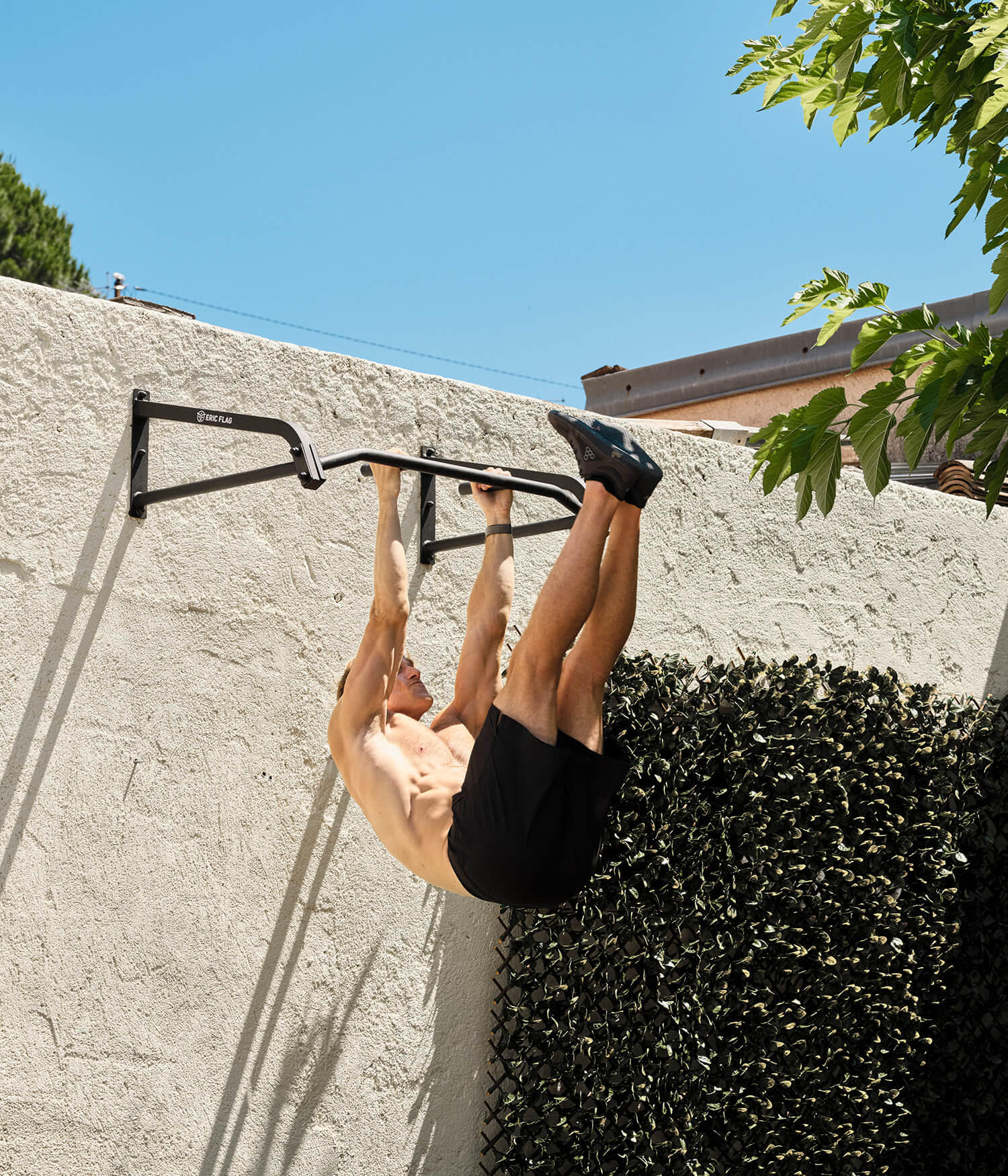
Toes-to-bar

Muscles worked:
, abdominals, rectus abdominis, hip flexors, back muscles, forearms...

Execution

  1. Hang from the bar with a firm grip.
  2. Engage your shoulders and tighten your core.
  3. Raise your legs straight up toward the bar.
  4. Touch the bar with your feet, or get as close to it as possible.
  5. Lower yourself slowly without letting your body sway.

Tips:
Start with knee raises if you still lack flexibility or core strength.

The quality of the descent is essential: the more controlled it is, the more effective the exercise is.
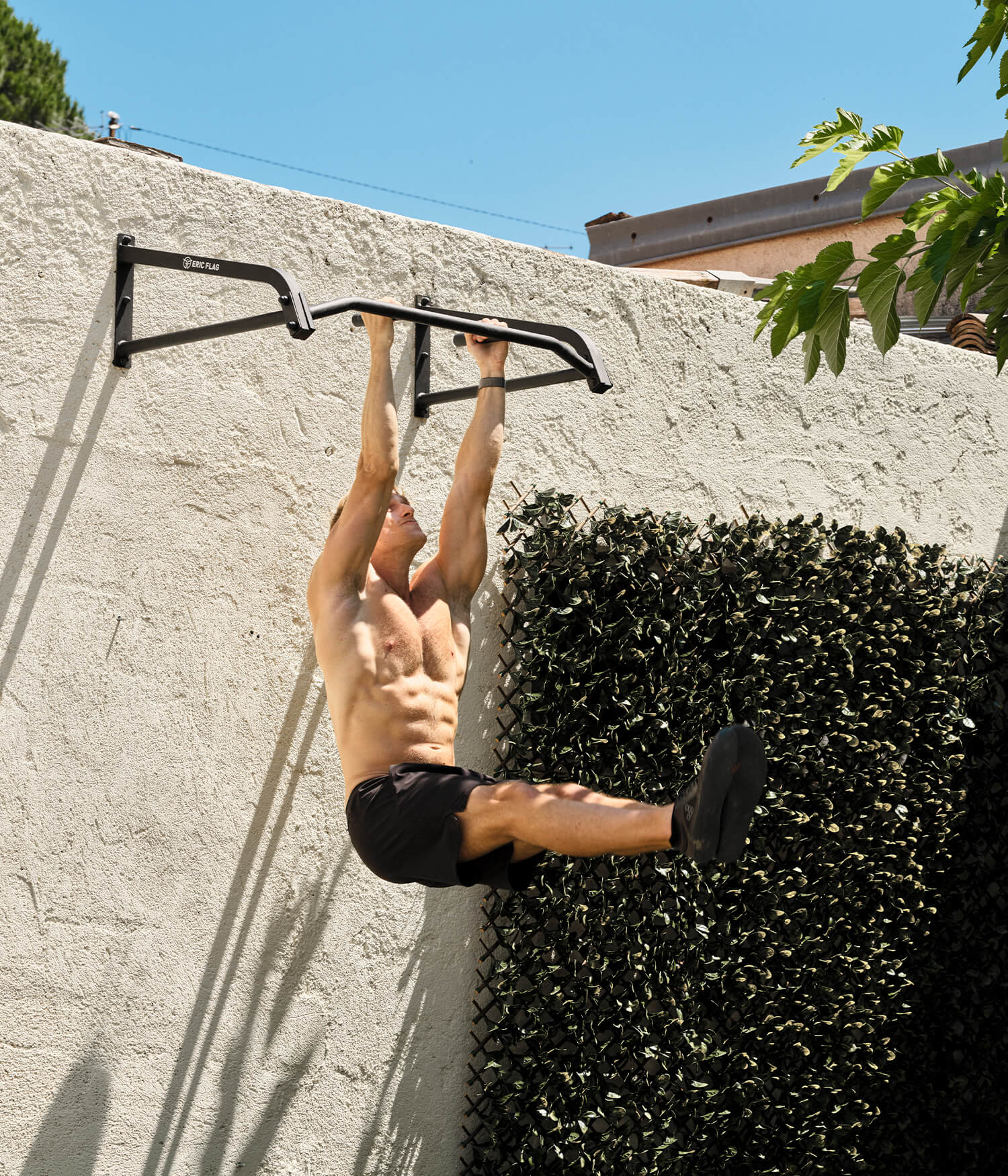
L-sit

Muscles exercised:
Abdominals, hip flexors, quadriceps.

Execution

  1. Hang from the bar with your arms straight and your shoulders pulled back.
  2. Tighten your abs before lifting your legs.
  3. Raise your legs straight up until they form a right angle with your torso.
  4. Hold the position for a few seconds without swaying.
  5. Slowly lower your legs, keeping control.

Tips:
If the straight-leg version is too difficult, start with your knees bent.

Focus on stability first, then gradually increase the hold time.
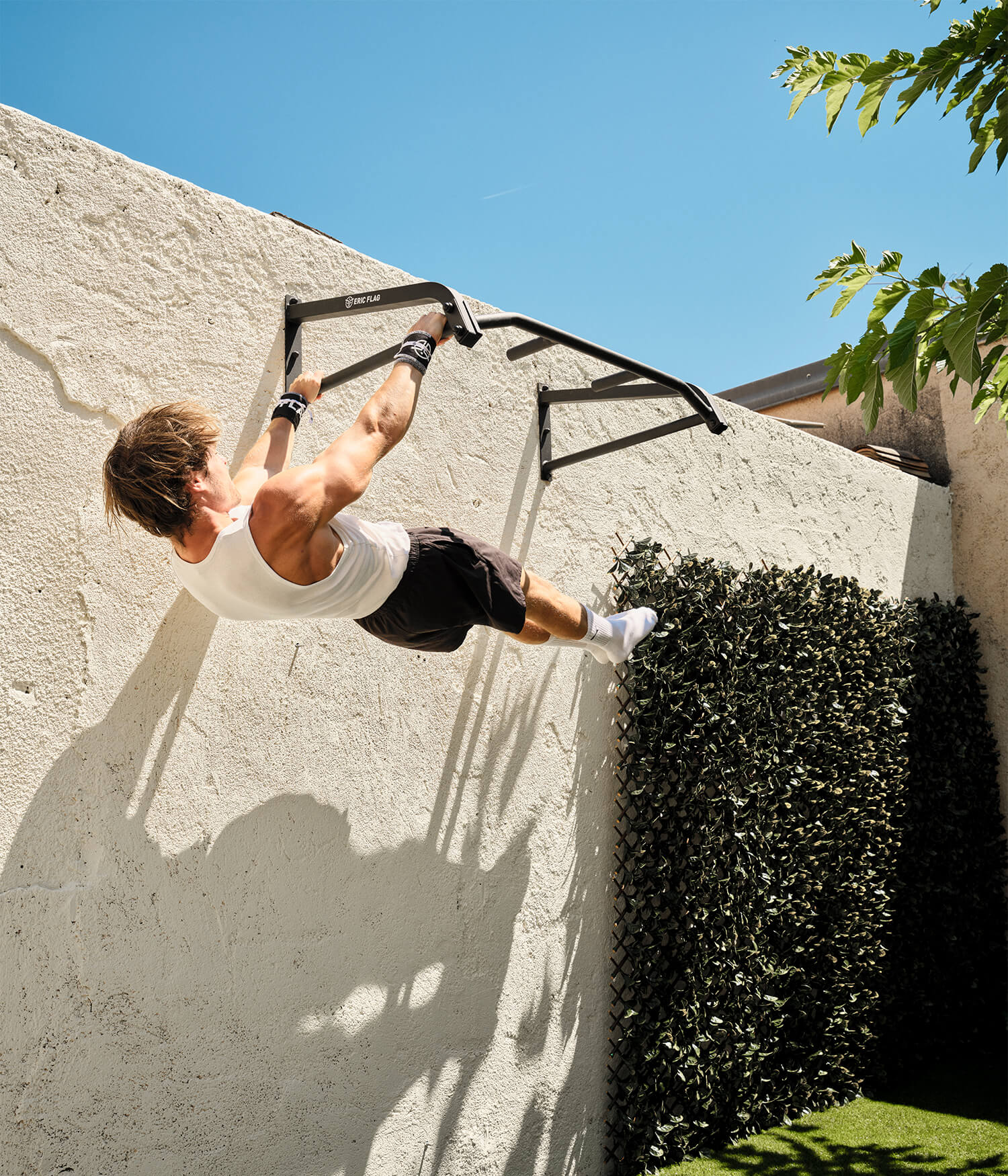
Front Lever

Muscles exercised:
Lats, abdominals, glutes, lumbar, posterior deltoids.

Execution

  1. Suspend yourself on the bar, arms outstretched, palms facing the floor.
  2. Engage your lats and core to lift your body into a horizontal position.
  3. Hold the position for a few seconds, without bending your arms.
  4. Lower back to the starting position with control.
  5. Keep your legs straight and your gaze forward.

Tips:
Work on the tuck front lever first, then the straddle before the full version.

Constant core tension is the key to stability.
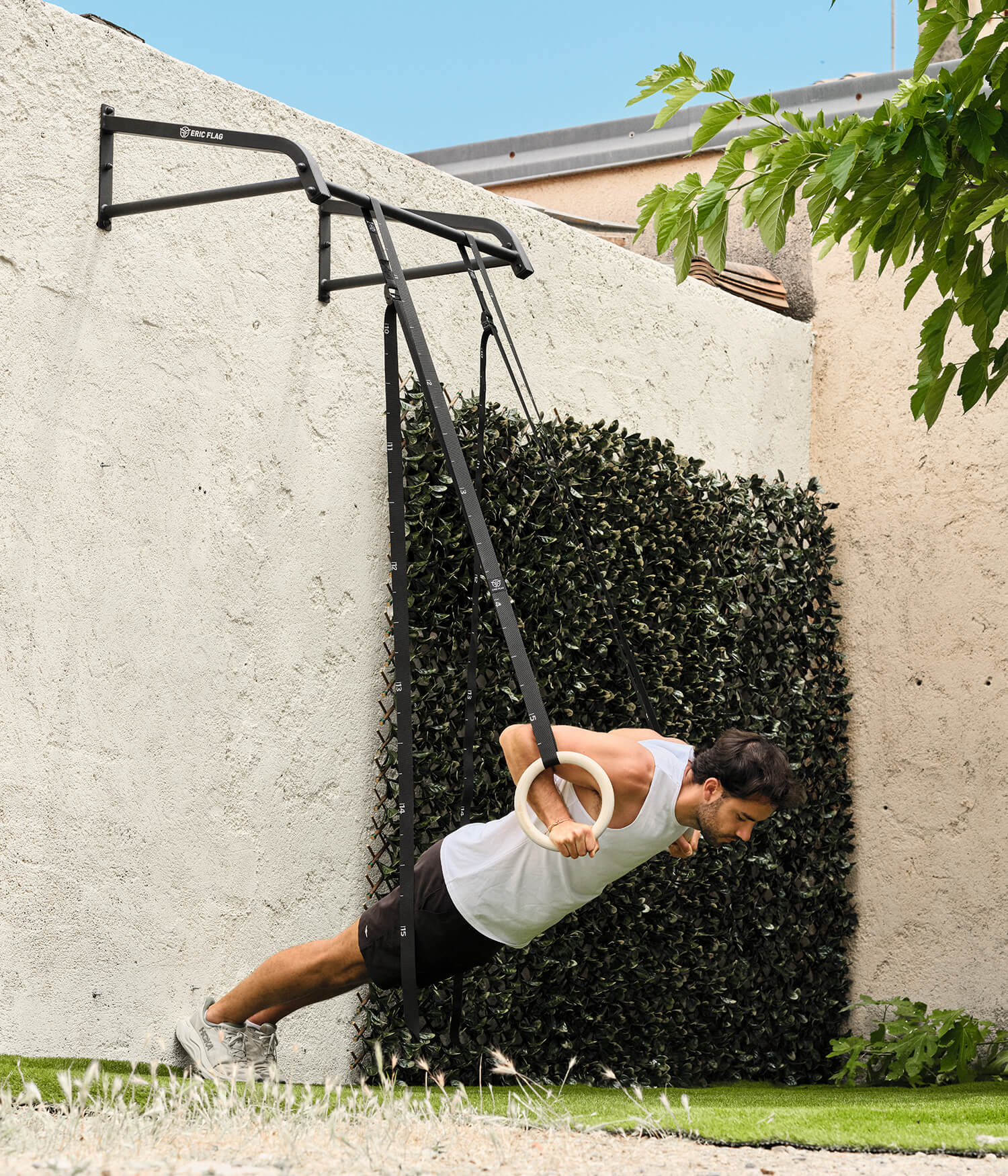
Ring push-ups

Muscles worked:
Chest, triceps, shoulders, abs.

Execution

  1. Set the gymnastic rings close to the ground and place one hand in each ring.
  2. Step your feet back so that a straight line is formed between your shoulders, hips, and ankles.
  3. Keep your abs and glutes tight to stabilize your body.
  4. Lower yourself slowly by bending your elbows, keeping the rings close to your chest.
  5. Push hard through the rings to return to an arms-out position, without losing your body alignment.

Tips:
The lower the rings are, the harder the exercise becomes.

Keep your arms steady and avoid letting your elbows flare out too far to the sides.
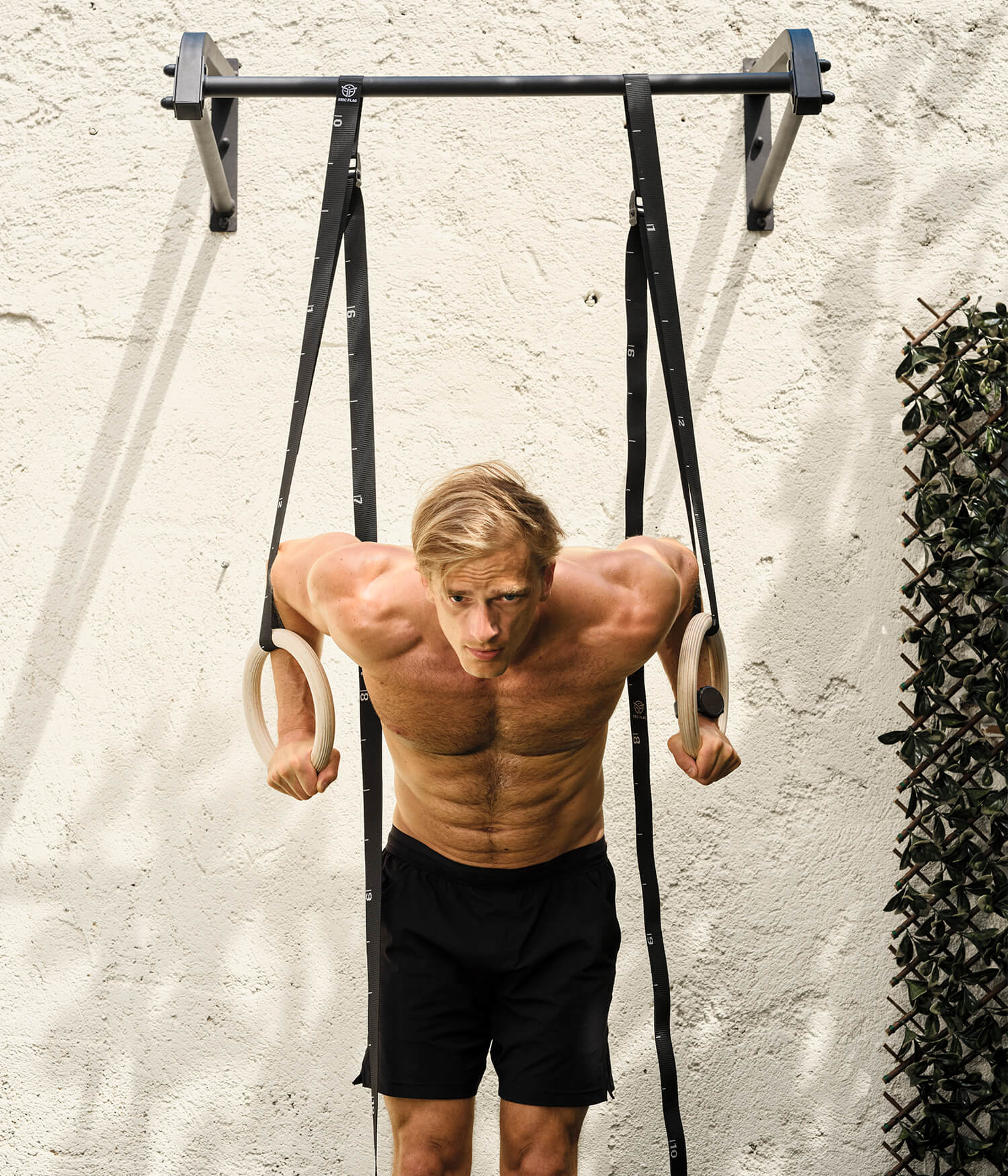
Ring Dips

Muscles worked:
Chest, triceps, shoulders, abs.

Execution

  1. Get into a ring support position with your arms straight and the rings close to your body.
  2. Engage your shoulders, tighten your core, and keep your upper body stable.
  3. Lower yourself slowly by bending your elbows, without letting the rings spread too far apart.
  4. Lower yourself until your shoulders are slightly below your elbows, depending on your range of motion.
  5. Push hard on the rings to return to the top position, with your arms straight.

Tips:
Keep the rings close to your body to improve stability and protect your shoulders.
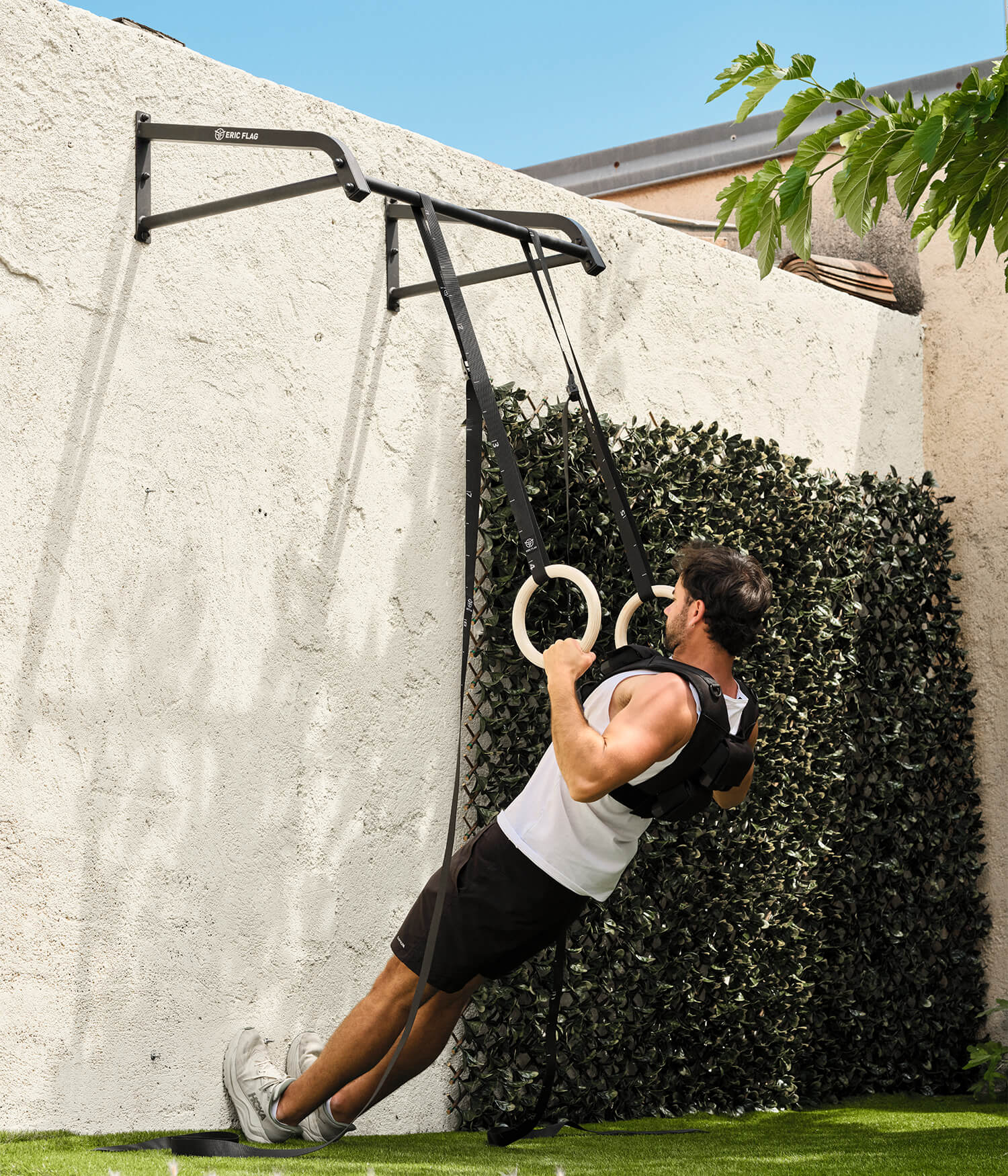
Australian pull-ups on the rings

Muscles worked:
Latissimus dorsi, trapezius, rhomboids, biceps, forearms, and core muscles.

How to do it:

  1. Stand under the rings and grasp them with your palms facing each other.
  2. Extend your arms and align your head, pelvis, and heels.
  3. Tighten your core and pull your shoulder blades back.
  4. Pull your chest toward the rings, keeping your elbows close to your body.
  5. Slowly lower yourself until your arms are fully extended.

Tips:
The closer your body is to horizontal, the harder the exercise is.

Avoid letting your hips sag: keep your core engaged and your body aligned throughout the entire movement.
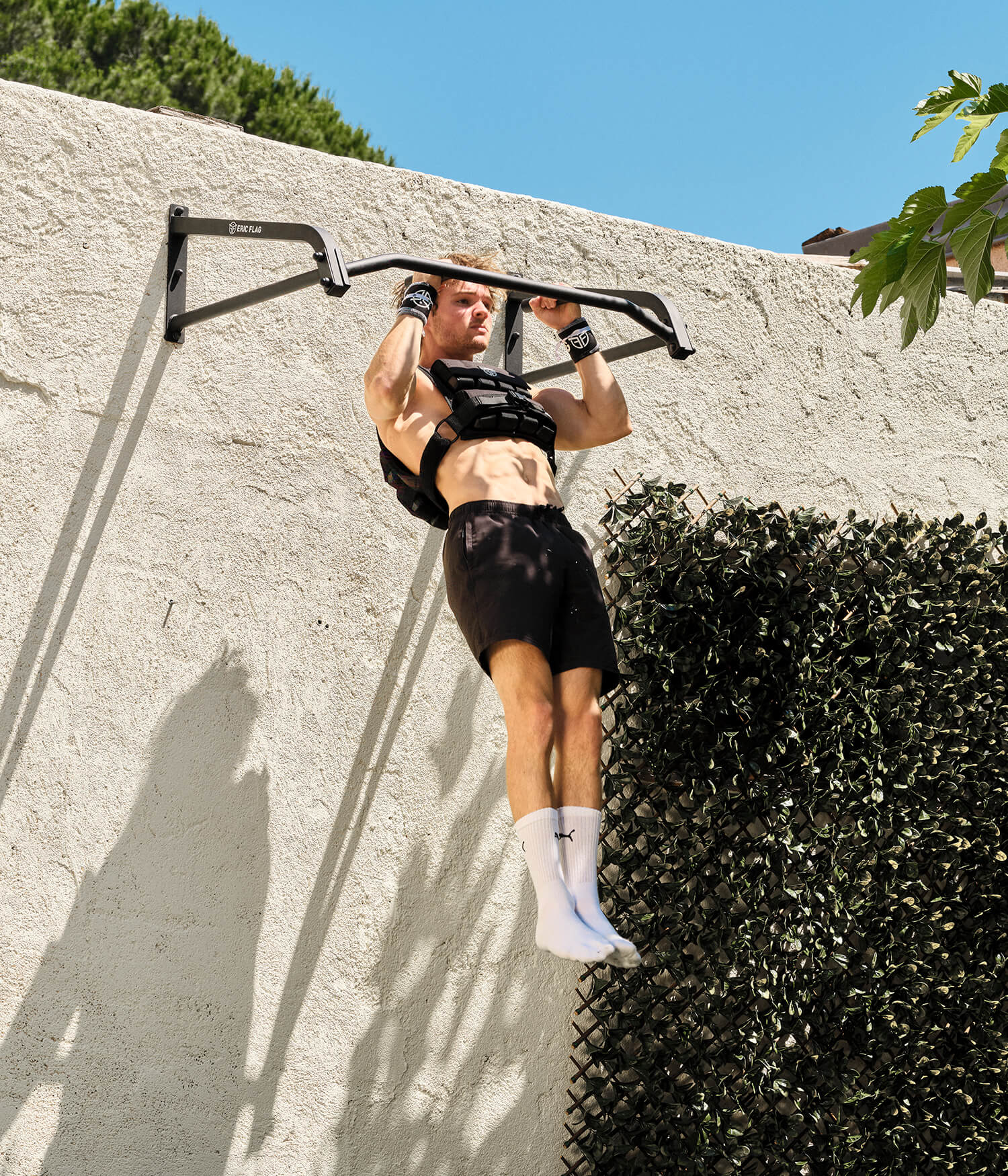
Weighted pull-ups

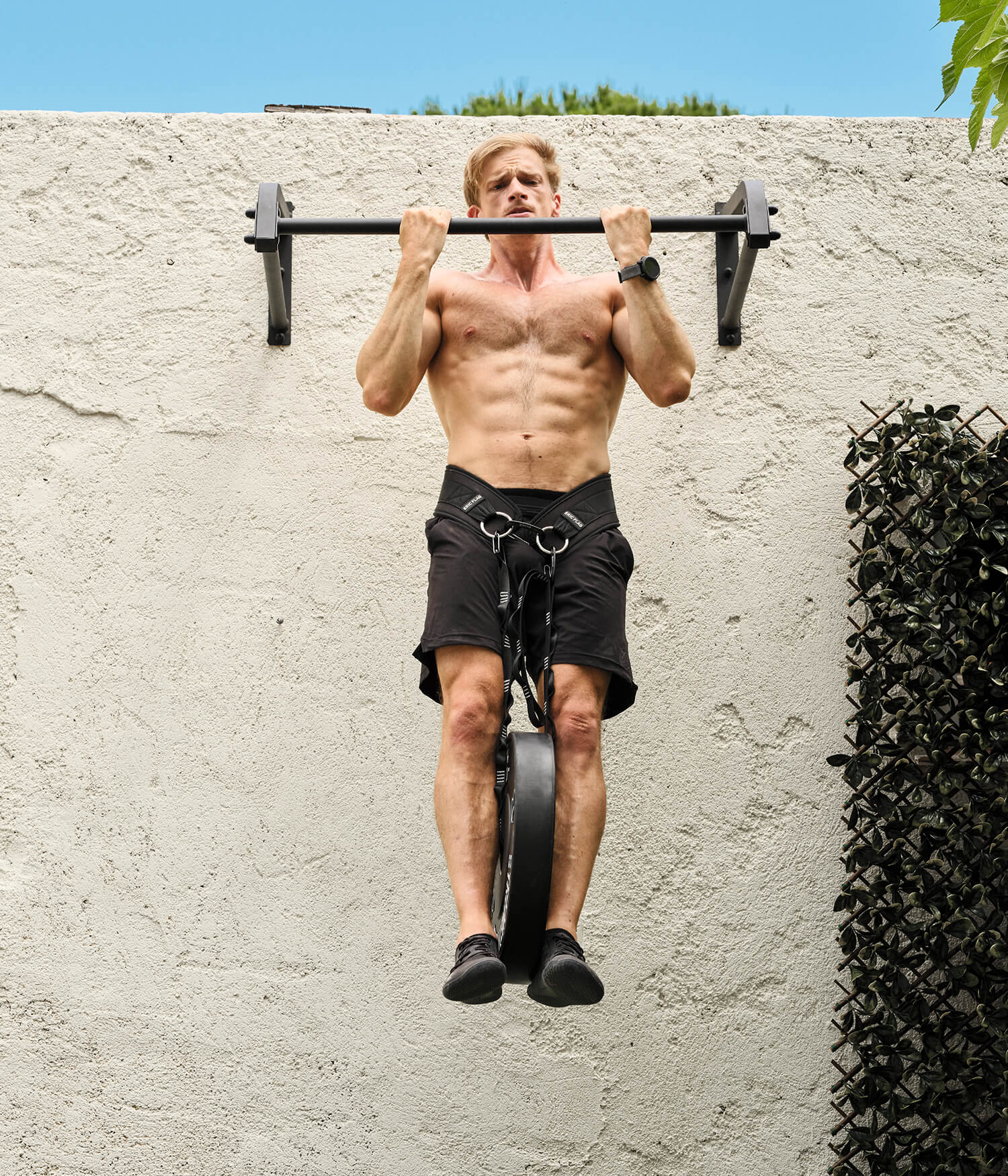
Once you have mastered bodyweight pull-ups, adding weight allows you to continue building strength and muscle mass without having to keep increasing the number of repetitions indefinitely.

Start light and maintain a clean, controlled form. The best way to add weight is by using a weighted vest or a weight belt.
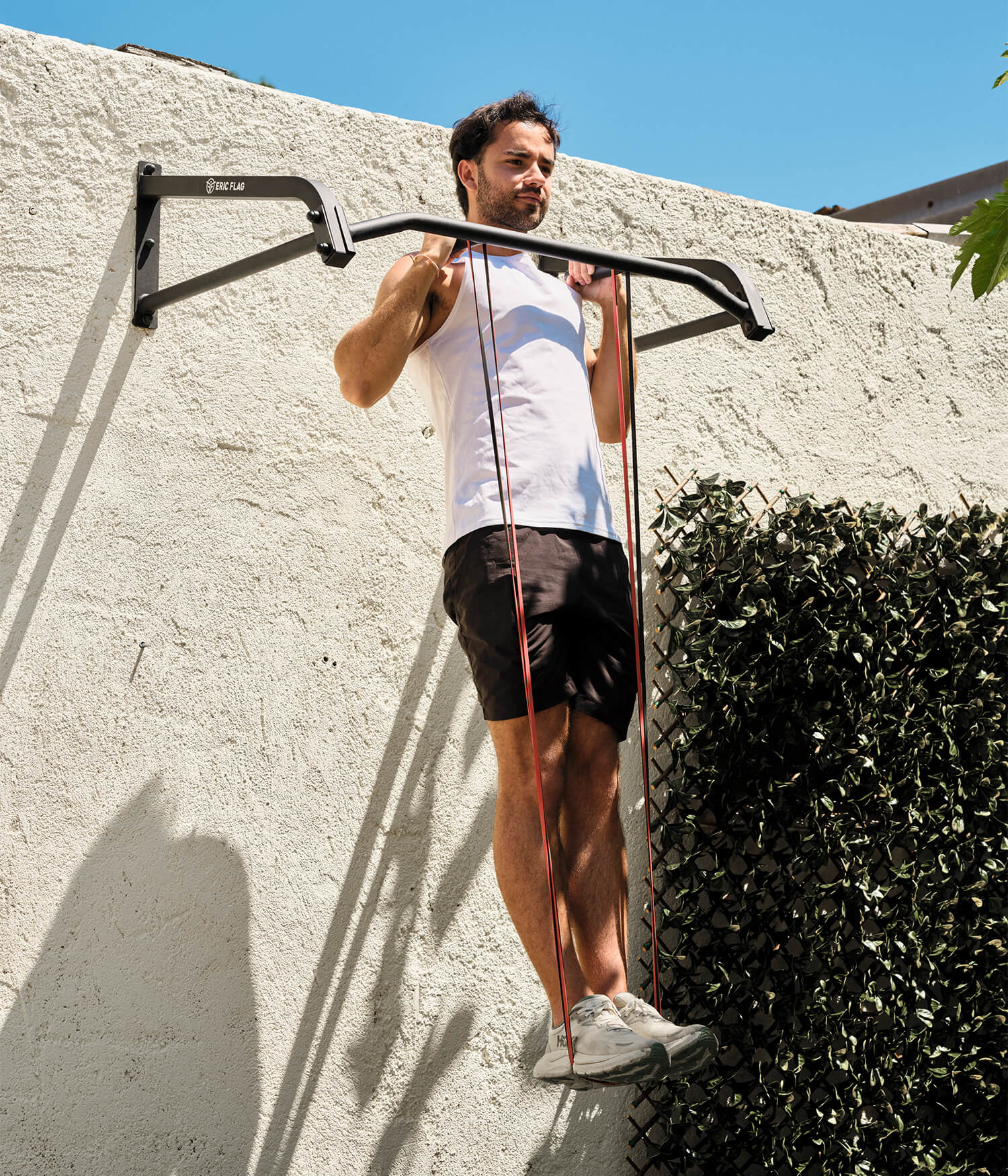
Power steering

Using resistance bands for pull-ups helps reduce the load and makes it easier to learn the proper form.

They are ideal for working your way up to full-range pull-ups while strengthening your back, arms, and core.